Don’t Assume the Iran War Is a Blow to China
Written by Jianli Yang
America’s Iran campaign may be justified — but strategic overreach could hand the advantage to Beijing.
Share this story
The United States has several legitimate reasons for striking Iran. Putting aside, for the sake of this analysis, domestic constitutional and political debates and broader questions of international law, the case for American action against Tehran rests on three pillars: self-defense, nuclear nonproliferation, and human rights.
First is self-defense. Since the 1979 Islamic Revolution, Iran’s regime and its proxies have repeatedly sought to kill, kidnap, and otherwise target Americans. The hostage crisis was the first instance of this, but certainly not the last. In the 1983 Beirut bombing, Iran-backed militants killed 220 U.S. Marines. During the Iraq War, Iran-trained militias were responsible for the deaths of more than 600 American service members. Iranian proxy groups such as Hamas and Hezbollah have killed numerous American citizens.
Second is nuclear nonproliferation. Iran has long pursued the capability to build nuclear weapons while simultaneously developing a formidable ballistic-missile program and sponsoring militant groups throughout the Middle East. Preventing a hostile regime that openly supports terrorism from acquiring nuclear weapons is a strategic objective shared by both the United States and Israel. Indeed, the official goals of the ongoing joint U.S.-Israeli campaign — destroying Iran’s missile infrastructure, degrading its naval forces, ending its ability to arm proxies, and preventing it from ever obtaining nuclear weapons — reflect precisely that logic.
Third is the humanitarian dimension. Iran’s regime has brutally repressed its own population for decades. Recent protests have been met with lethal force, and thousands of demonstrators have reportedly been killed during crackdowns. From a moral standpoint, weakening a regime that violently suppresses its citizens can also serve a broader humanitarian purpose.
Yet justification for beginning a war is not the same as clarity about how to end one.
Since the operation began, the United States has shifted its stated objectives. Initially framed as a campaign to degrade Iran’s missile and nuclear infrastructure, the administration’s rhetoric has increasingly moved toward regime change. Trump has publicly demanded Iran’s “unconditional surrender” and suggested that he should be involved in selecting the country’s future leadership.
This shift has understandably triggered anxiety in Washington and beyond. History offers a sobering lesson about the limits of the ongoing campaign: regime change through airpower alone is almost impossible. From Iraq to Afghanistan, recent experience demonstrates that overthrowing an entrenched government generally requires ground forces. Underscoring the difficulty of full-scale regime change, a recent U.S. intelligence assessment concluded that large-scale military action would be unlikely to remove Iran’s clerical regime because its security institutions remain deeply entrenched.
Nevertheless, Trump has not ruled out the possibility of deploying American troops. Reports suggest that the administration is keeping the option of U.S. ground forces — including special operations units — on the table. Other proposals reportedly under discussion include seizing Iran’s key oil export terminal at Kharg Island. Each of these options would represent a dramatic escalation.
Taken together, these signals point to the possibility that the United States could gradually descend into a widening conflict in the Middle East. But long wars rarely serve American interests.
In the first week of the conflict, a quick and decisive outcome appeared to be in the works. A joint U.S.-Israeli decapitation strike killed Iran’s supreme leader, Ali Khamenei, in the opening phase of the campaign. Iranian missile infrastructure suffered severe damage, and American airpower demonstrated its unmatched reach.
Yet, as the conflict drags on, one party could be the ultimate geopolitical beneficiary: China.
Some analysts have argued that the war is fundamentally about China — that it stands to weaken Beijing’s strategic position. According to this view, China will lose access to Iranian oil, its Middle Eastern diplomacy will collapse, and America’s projection of military power will intimidate Xi Jinping.
There is some truth in the first claim. China is indeed Iran’s largest oil customer, and disruption in Iranian exports would impose costs on Beijing.
But China is remarkably adaptable. If Iranian oil disappears from the market, Beijing will simply purchase more from Russia or other suppliers. Energy markets are flexible, and Chinese strategic planners understand this.
Nor is Iran central to China’s grand strategy. Beijing’s global priorities lie elsewhere: the Indo-Pacific, technological competition with the United States, and ultimately seizing Taiwan. Iran is a secondary piece on China’s strategic chessboard. If that piece breaks, China will replace it.
Indeed, Beijing will likely seek to establish pragmatic relations with whatever government eventually emerges in Tehran — whether clerical or secular, authoritarian or democratic, or pro-America or not. Economic gravity ensures this outcome.
The real strategic danger lies elsewhere.
Since the end of the Cold War, every American president — Republican and Democrat alike — has recognized that China represents the most consequential long-term challenge to U.S. power. Yet at crucial strategic moments, Middle Eastern crises have repeatedly diverted American attention.
Protracted wars in Iraq and Afghanistan — the centerpiece campaigns of the war on terror — consumed America’s attention for two decades. During those 20 years, China quietly expanded its economic, technological, and military capabilities across nearly every domain. Today, China possesses the world’s largest manufacturing base, a rapidly expanding navy, and a defense-industrial system capable of sustaining prolonged conflict.
America’s own industrial base, by contrast, has atrophied. A recent assessment from the Heritage Foundation’s 2026 Index of U.S. Military Strength warns that in a prolonged conflict with China, the United States could exhaust critical platforms, ammunition, and fuel faster than its adversary. The simulation’s conclusion was stark: the United States would reach operational exhaustion in less than half the time required for China to do the same.
A prolonged Middle Eastern war would only accelerate this imbalance.
Hypothetical ground operations in Iran, should it come to that, would require enormous resources. Iran’s population is nearly three times that of Iraq, and its territory is more than four times larger. Such a campaign would drain American military readiness, economic resources, and political legitimacy — both internationally and domestically.
Meanwhile, instead of scrambling (as some think), Xi Jinping would watch carefully.
For Beijing, Taiwan remains the central strategic objective. Xi has tied his historical legacy to the “great rejuvenation of the Chinese nation,” of which unification with Taiwan is a — and perhaps the — key component. But the timing of any move against Taiwan will depend heavily on the perceived balance of power between China and the United States. A distracted America could shift that balance dramatically.
The best strategy for the United States, therefore, is clear.
In the short term, Washington should immediately clarify the objectives of the current military campaign. The goal should remain limited: destroying Iran’s ballistic-missile capabilities, crippling its ability to arm proxies, and ensuring that it never acquires nuclear weapons.
Once those objectives are achieved, the United States should declare victory and end its military operations.
In the long term, the strategy should combine sustained economic sanctions with diplomatic engagement aimed at preventing Iran from rebuilding its nuclear program. If Tehran again approaches nuclear breakout capability, the United States should be prepared to strike again — swiftly, decisively, and without long-term engagement or occupation.
At the same time, America should support the Iranian people in their pursuit of political freedom. But genuine democratic change cannot be imposed from outside. It requires ingrained and widespread popular dissatisfaction, a viable democratic opposition, fractures within the ruling elite, and international support rooted in liberal values rather than geopolitical manipulation. In supporting the Iranian people’s pursuit of democratic change, the United States must avoid turning democratic forces into pure instruments of American interests, which would only reinforce the regime’s propaganda. No democratic transformation can succeed if it runs against the Iranian people’s nationalist sentiments.
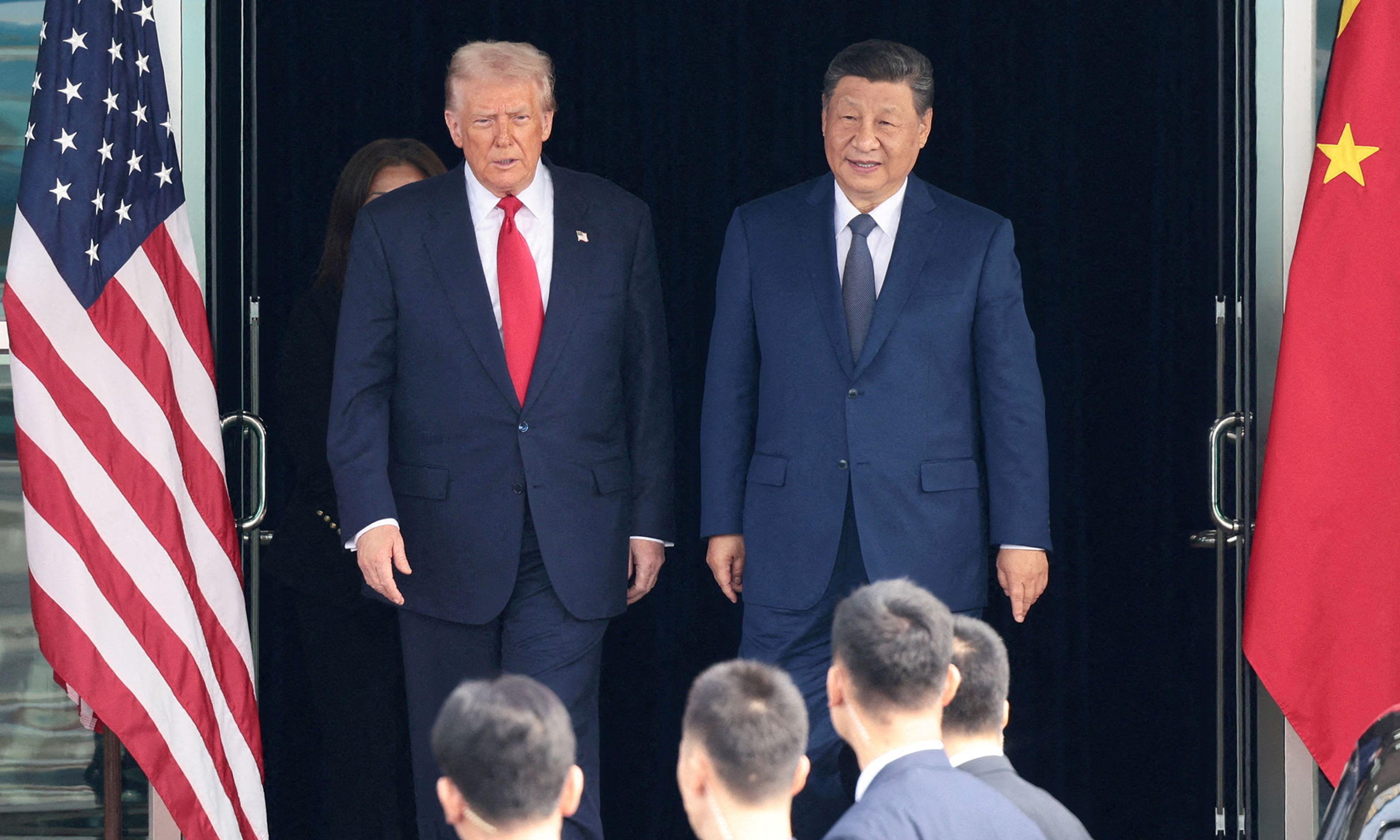
As Trump prepares to travel to Beijing for a summit with Xi later this month, the potential drawbacks of sustained U.S. involvement in Iran are being brought into focus. If it became clear that the United States was gradually sinking into an Iranian quagmire while inflation at home rises because of war-driven energy shocks, Trump’s bargaining position would inevitably weaken in negotiations with Xi on trade, Taiwan, and a range of other geopolitical issues. Beijing would see little reason to compromise with a United States that appears strategically distracted and economically pressured. If Washington appears overextended in the Middle East, Xi Jinping will negotiate accordingly.
In geopolitics, timing is everything. It takes nimbleness and resolve to know when to start a war. But it takes even greater wisdom and vision to know when to stop.
[slideshow slideshow="1924783" /]

About the Author
Jianli Yang is a research fellow at the Harvard Kennedy School of Government, a columnist for National Review, and the founder and president of Citizen Power Initiatives.
Featured Tags
Advertisement
Advertisement
Comments