Discovering Raimundo de Madrazo and Spain’s Sparkling 19th Century
Written by Brian T. Allen
The Meadows Museum in Dallas shows us there’s lots happening in Spanish art between Goya and Picasso.
Share this story
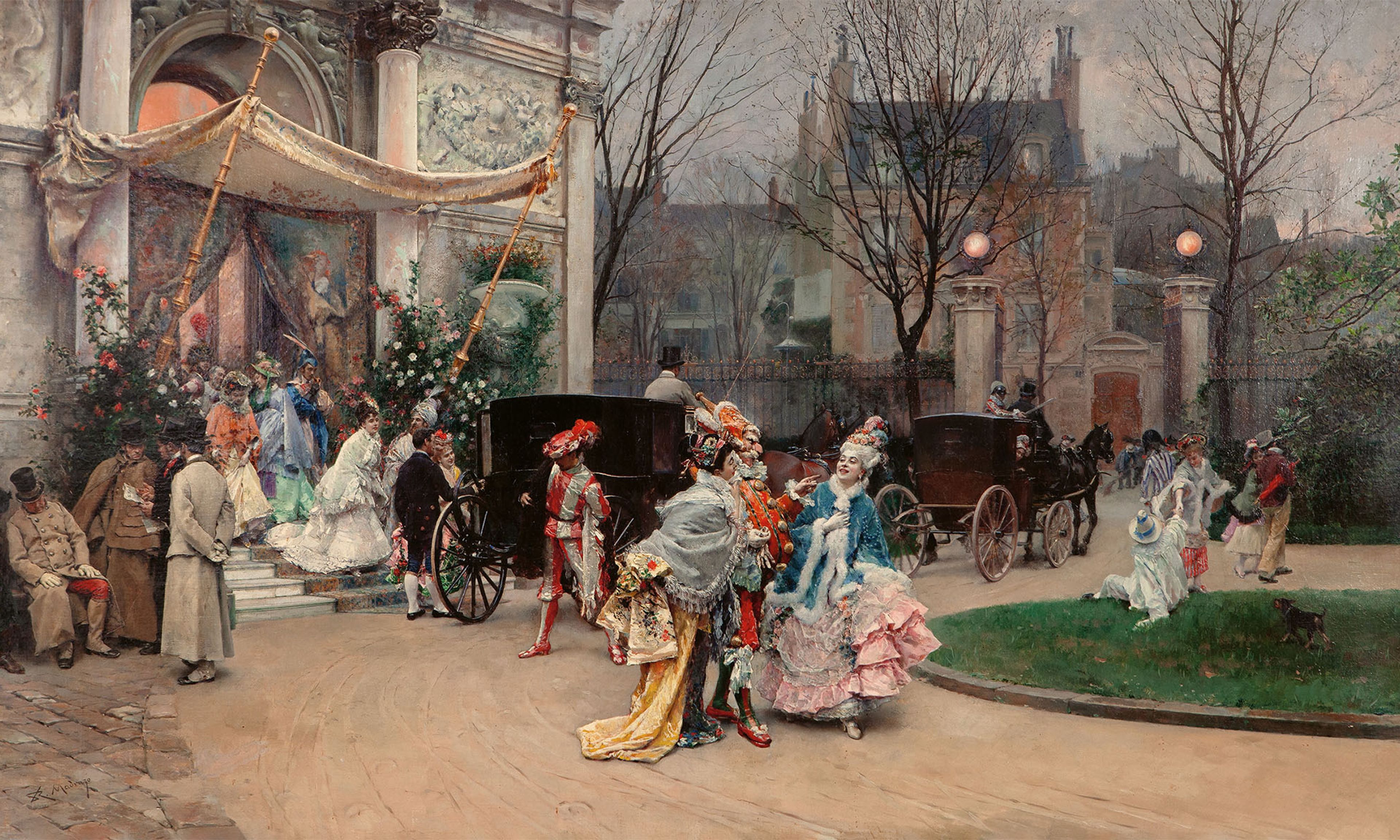
I always enjoy visiting the Meadows Museum, the art museum at Southern Methodist University in Dallas. Its founder, Algur Meadows, wanted what he called “a Prado on the prairie,” and that he got and more. The Meadows collects Spanish art from the tenth century to our time -- and what treasures. It’s got plenty of Spanish medieval art, often an amalgam of Italian, French, and Flemish style with a Moorish touch. The Meadows has top-notch work by Velázquez, Goya, El Greco, Murillo, and Ribera, too, but the time between Goya, who died in 1828, and Picasso, coming into his own around 1900, is hardly a black hole. The Meadows excels there, too.
Lovers of Spanish art know Mariano Fortuny, the Catalan savant who died in 1874 at a young age but was on a parallel track heading toward Impressionism. His son was the famous Venice-based textile designer. Only Spanish specialists tend to know Fortuny’s brother-in-law and peer, Raimundo de Madrazo y Garreta (1841–1920).
The Meadows puts Madrazo front and center and in the mainstream in a delicious, riveting retrospective that opened in late February after its premiere in Madrid at the Mapfre Foundation’s art space.
Both Fortuny and Madrazo were visionaries, though in different ways. Madrazo’s fame comes partly from his Belle Époque Paris portraits and American Gilded Age portraits. These show that he’s John Singer Sargent’s peer. There’s much else to his story. Leaving the Masked Ball, from 1878, shows him as a painter of joy and delight. The Meadows does everything well. Problem curators from other places should go there for rehabilitation.
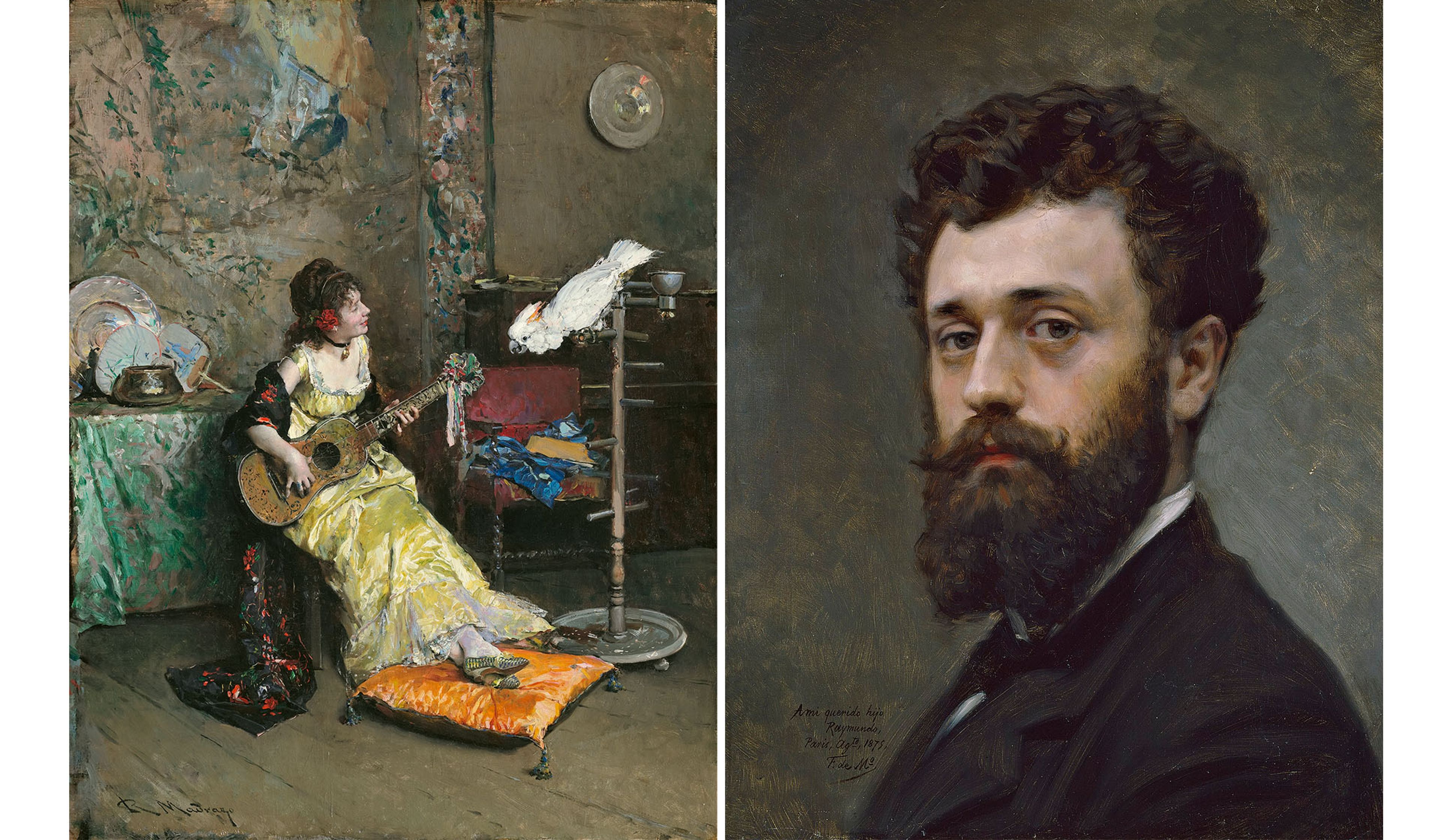
Raimundo de Madrazo consists of around 75 works from museums and private collections in America and Europe, many pried from their homes for American viewers for the first time. The exhibition is divided into sections starting with Madrazo’s family -- his grandfather was the director of the Prado -- and unfolding through his early years in Paris and his collaborations and artistic exchanges with Fortuny, who married Raimundo’s sister. There’s a section called Nonchalance -- it’s lovely -- and his smashing full-length portraits of grand American ladies.
I’ll start with Woman with a Parrot, from around 1872, since it’s one of Madrazo’s most celebrated pictures, and I have a sentimental attachment to it. I like tableautins, small pictures, since I can imagine them in my home and like miniaturist sparkle. Madrazo became well-known for doing these and was among artists -- Spanish, Belgian like Alfred Stevens, and French -- who pioneered what would be called “Ladies of the Eighties.” These tend to be small paintings of young women at leisure, usually well-born and well-dressed, but even the peasant women are dressed to kill. Impressionists such as Renoir had a knack for pretty young things in the 1870s and ’80s. Madrazo’s scene shows a young woman in a Spanish-style yellow silk dress, a red rose tucked behind her ear, playing a guitar while her parrot seems to sing with her. It’s a tiny thing, about 19 by 15 inches, but packed with French, Spanish, Moorish, and Japanese props from Madrazo’s studio.
Spanish artists have always been clever and willful amalgamators. They take what looks good, regardless of country of origin and time period, and make something distinctive from the mix. Madrazo and Fortuny were their century’s masters. Madrazo was born in Rome to a dynasty of artists, studied in Spain and Paris, and, after the mid-1860s, lived mostly in Paris. He’s a realist, never an Impressionist. He never embraces theories on color and light, doesn’t depict city life, rarely does landscapes, and never goes gauzy. His paint surfaces, though, tend to sparkle. Velázquez’s dabs of paint on royal garments set the standard, as did Spanish artists’ edgy, brilliant sense of color. Our young woman and her singing parrot revel in rainbow colors, with never a nails-against-a-blackboard screech. Burgundy, blue, salmon, mint green, and lemon yellow together are very fizzy indeed.
Me, sentimental? On rare moments like these, yes. Woman with a Parrot belongs to the Clark Art Institute, where I was a curator for years, and though I specialized in American art, the staff was small so that we needed to know something about everything -- Sargent, Homer, Degas, Renoir, Dürer, English silver, French porcelain. Sterling Clark, the founder of the museum, collected all of them in depth. He bought 15 or so Spanish paintings and watercolors from the 1870s and ’80s, among them very good things by Madrazo and Fortuny. He liked art depicting pretty young women but, aside from these, bought next to no Spanish art; he didn’t like religious art and thought Picasso was a lunatic. He bought his Madrazos and Fortunys for their quality. They were the best of their kind.
I’m always happy to see a Clark picture in an international exhibition, but Woman with a Parrot is special because I met the Meadows’s longtime -- and, alas, now dead -- director Mark Roglan when he was a graduate student in the late 1990s, as he was finishing his dissertation on 19th-century Spanish art in American collections. Mark was in his late 20s then, and we hit it off as I showed him the Clark’s Spanish things. No one at the Clark aside from me was interested in them. At the Clark, most of the love went to French art. Mark and I talked then about doing a Madrazo retrospective, someday, somewhere, as well as a Fortuny retrospective.
Before too long, Mark was a curator at the Meadows, which had a very good collection but awaited dynamic, smart leadership to take flight. They got it in Mark, who became director. He was just starting to plan this Madrazo retrospective when he died at 50 in 2021 of a rare cancer. It’s good to see a retrospective that matches his ambition and vision.
A section in the exhibition treats Madrazo’s family and his very early work. Immersed in art as a family enterprise and surrounded by talented artists in his father, uncles, and grandfathers, he developed his inherent talent fast. At 13, he was a student at the San Fernando Academy, Spain’s premier art school, and then went to Paris, where he studied with Léon Cogniet, who’d taught Rosa Bonheur and Ernest Meissonier. Madrazo made the decision, a horror to his family, to focus on scenes of everyday life rather than history and religious painting. He’d tried that and was good at multifigure opuses, but it wasn’t for him. He wanted to be a modern painter. He was also market-savvy. Bourgeois buyers wanted joy and beauty as well as things that could fit in Paris apartments.
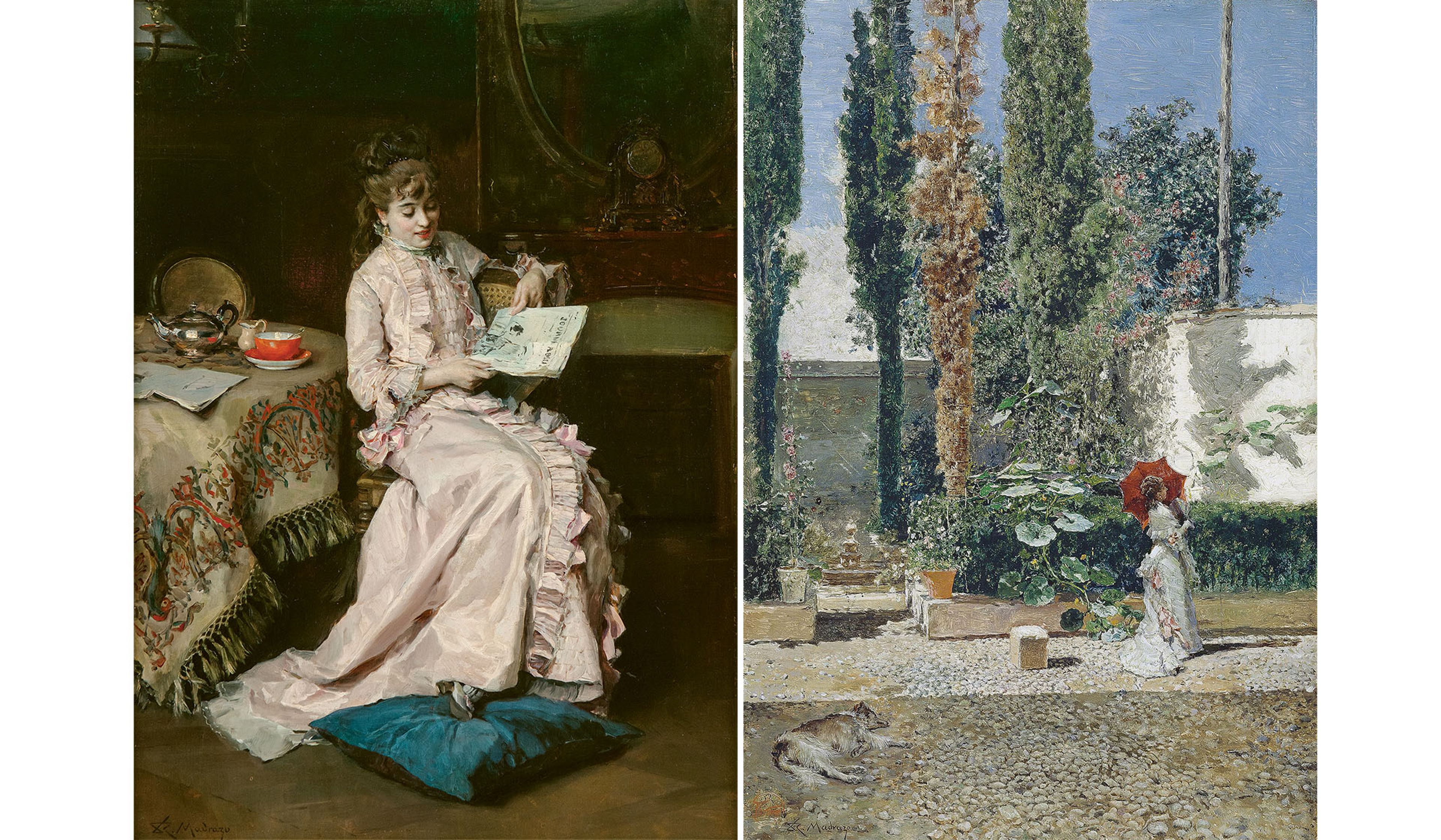
A section on Madrazo and Fortuny had the difficult task of breaking the bad habit of looking at Madrazo as Fortuny’s follower and acolyte rather than his peer. A section in the exhibition and chapter in the book does the trick. Their painting trips together in the late 1860s and early ’70s focused on southern Spain. Madrazo’s pictures are crisper. He’s a wonderful figure painter, better than Fortuny, and very good in setting figures in space, indoors and outdoors. It’s hard to beat Fortuny in surface dazzle, created not à la Gérôme with a high degree of finish, but in dabs that seem beautiful and abstract close up while fully resolved from a distance. Fortuny’s Garden of the Fortuny Residence, from 1872, retouched by Madrazo in 1877, tells us that Fortuny’s a star when it comes to atmosphere. We can feel the heat.
Fortuny died in 1874, already internationally famous but just in the middle of his career, so we don’t know where he would have gone. Madrazo’s brother-in-law, Ricardo, painted the interior of Fortuny’s studio in 1874 as he and his father Federico inventoried what was there. The painting shows the width and depth of Fortuny’s vision but also the look of abundance that Fortuny cultivated. I left the show gratified to see how different they were.
It’s a delight to walk through the Nonchalance gallery and see good curators valuing the spirit and humanity of an age rather than wallowing in grudges and grievances. By the 1870s, artists in Paris had stopped depicting heroes of the past in favor of lighter fare -- intimate images of life’s everyday delights enjoyed by anonymous figures. Fortuny aimed at this mood in multi-figure scenes such as The Vicarage in the late 1860s, not in the show but filled with classic Spanish types like majos and majas, priests, dandies, and bullfighters.
Fortuny did Rococo Revival scenes, too, sometimes buoyantly dressed groups in French salons before the déluge of French revolutionary violence in 1793. Madrazo tends to condense all of these elements into a single female figure who conveyed Spanish exoticism and, before too long, French elegance.
Woman with a Parrot packs a punch since the figures -- woman and bird -- are dynamic, as is the well-stocked setting, but, as the years passed, Madrazo’s women had less of a race-car vibe. Action might be confined to stirring a cup of coffee, reading a letter, exchanging glances, or napping. The figures are often sweet, sometimes melancholic, sometimes winsome to a fault, but that’s not a putdown of Madrazo. He pitched the look of his ladies to his patrons. Some are more sensate than others, and some look crypto-Impressionist. Coquettes were in style but not tarts. Those were the province of Degas and Toulouse-Lautrec, though a French critic in 1888 said that Madrazo paints “women who have nothing to regret,” a description that one could take in two ways.
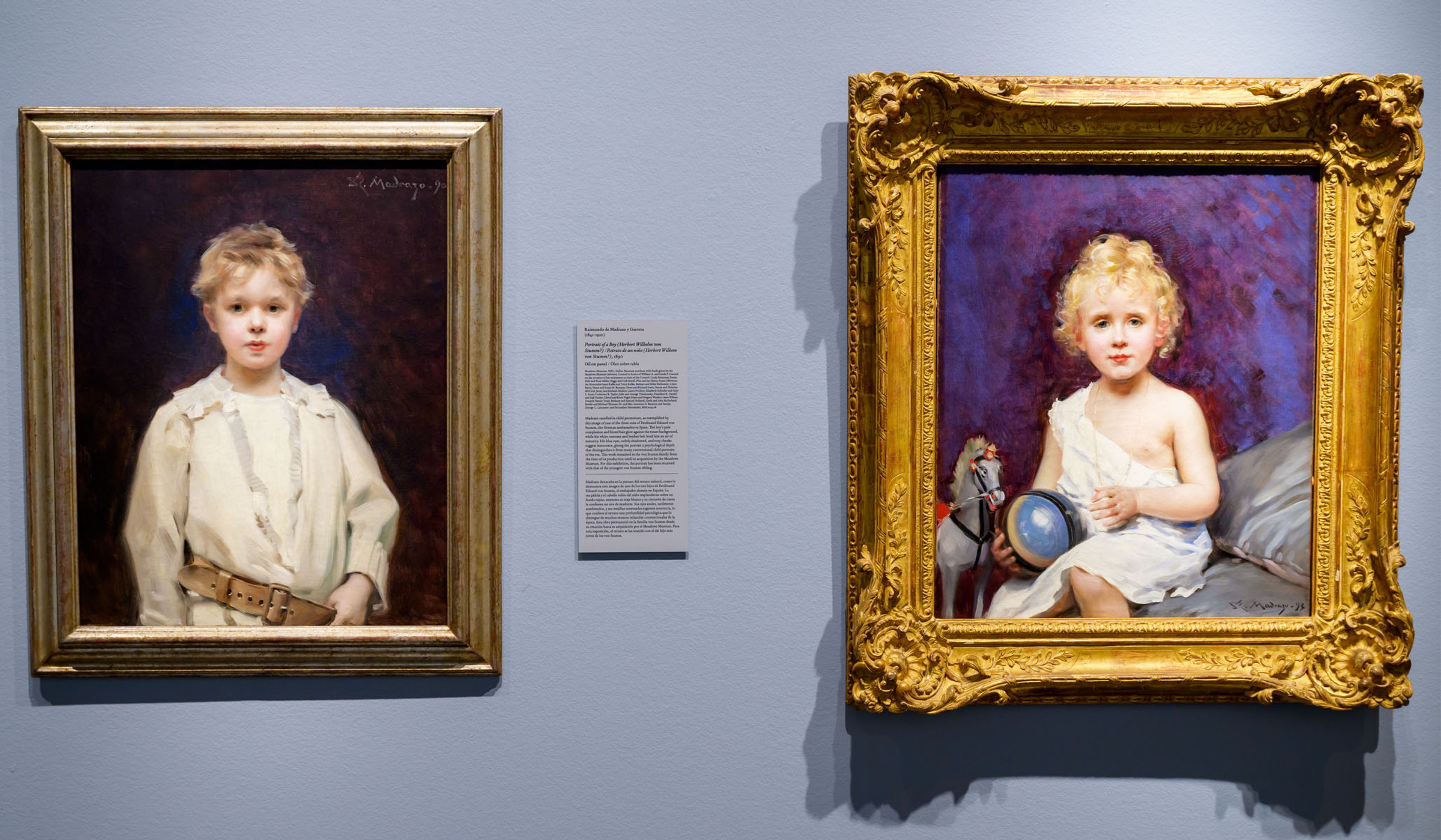
Madrazo was a very good painter of children and could be Sargent’s match with pictures such as Portrait of a Boy (Herbert Wilhelm von Stumm?), from 1890. He was the son of the German ambassador to Spain. His pale face and blond hair glow against a russet background, but it’s that brown-leather belt that makes it great. He’s sweet as pie but debonair, even a rake-in-the-making. The cow who supplied the leather for that belt died for a worthy cause.
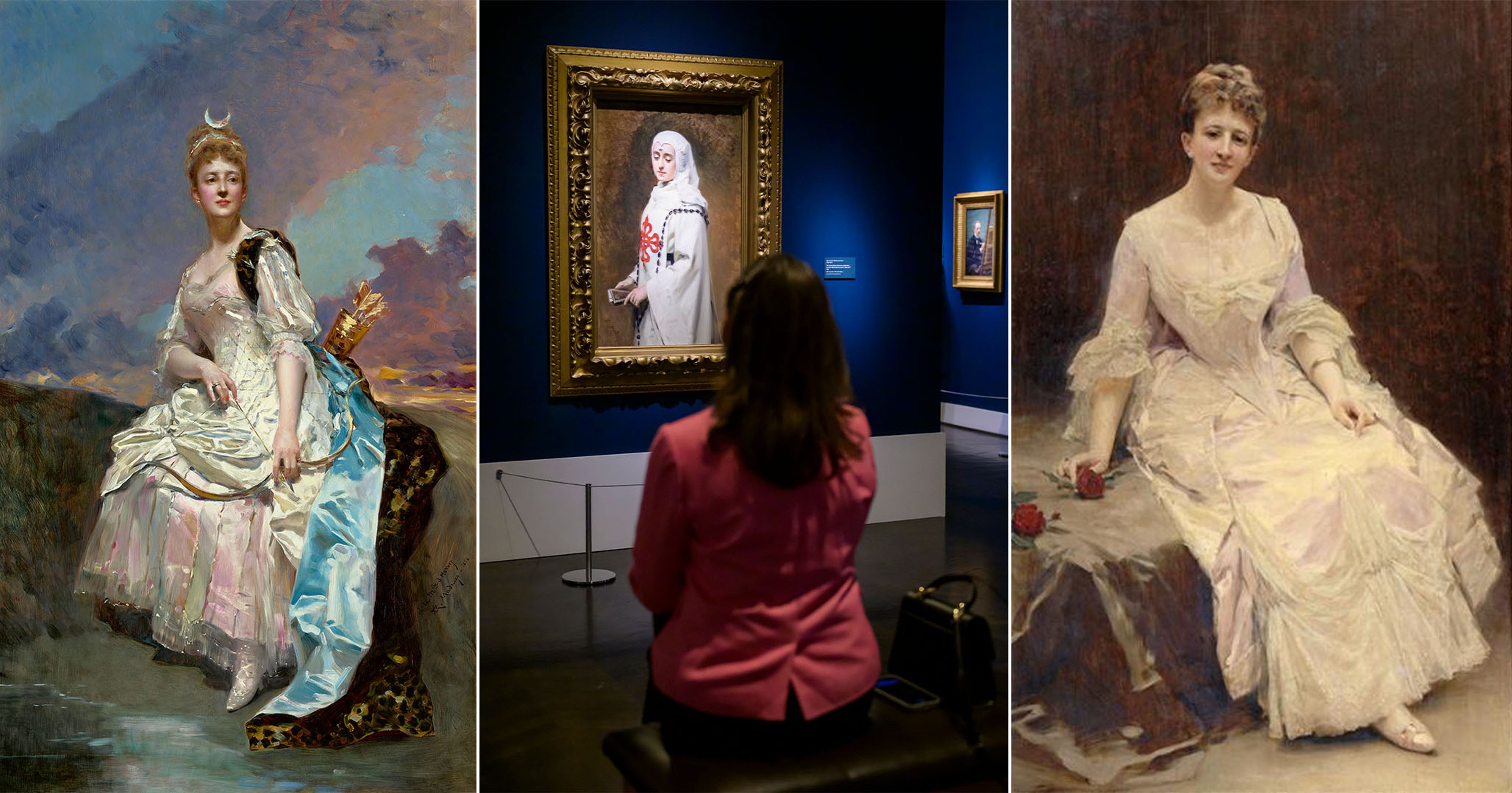
There’s a jaw-dropping grand gallery of Madrazo’s high-society portraits on one long wall, but before I focus on these, I commend the good curatorial taste in hanging opposite them on freestanding walls a selection of bracing portraits by Madrazo, including Benoít-Constant Coquelin, from the late 1870s; The Fencing Master, from 1874; and The Actress Maria Guerrero as Doña Inés, from 1891. Coquelin, one of the great French actors of his time, was famous for touring America in Cyrano de Bergerac with Sarah Bernhardt. Coquelin was the consummate interpreter of Molière, whom he was said to resemble. Guerrero was part of his circle. I like these pictures because they’re tough and deliver an electric spark. Coquelin’s portrait has a touch of Velázquez’s portraits of royal court jesters but also of Hals. The wall color is Pacific Sea Teal, a brilliant choice that helps the art pop, given all its creams, pinks, blues, and variations of rust.
They’re a compelling contrast to the full-length portraits in which Madrazo excelled and for which he built an audience in Europe but also America. There’s the 1881 portrait of the Duchess-consort of Alba, a heavy-hitter client -- blue, red, and black, with her white skin giving her the presence of a Van Dyke. There are two full-length portraits of the Marquise d’Hervey de Saint Denys, one in 1885 that’s direct and harmonious in its pinks and lavenders and another from 1888 of the marquise dressed as the goddess Diana with a quiver, bow, arrow, and a crescent fixed to her hair.
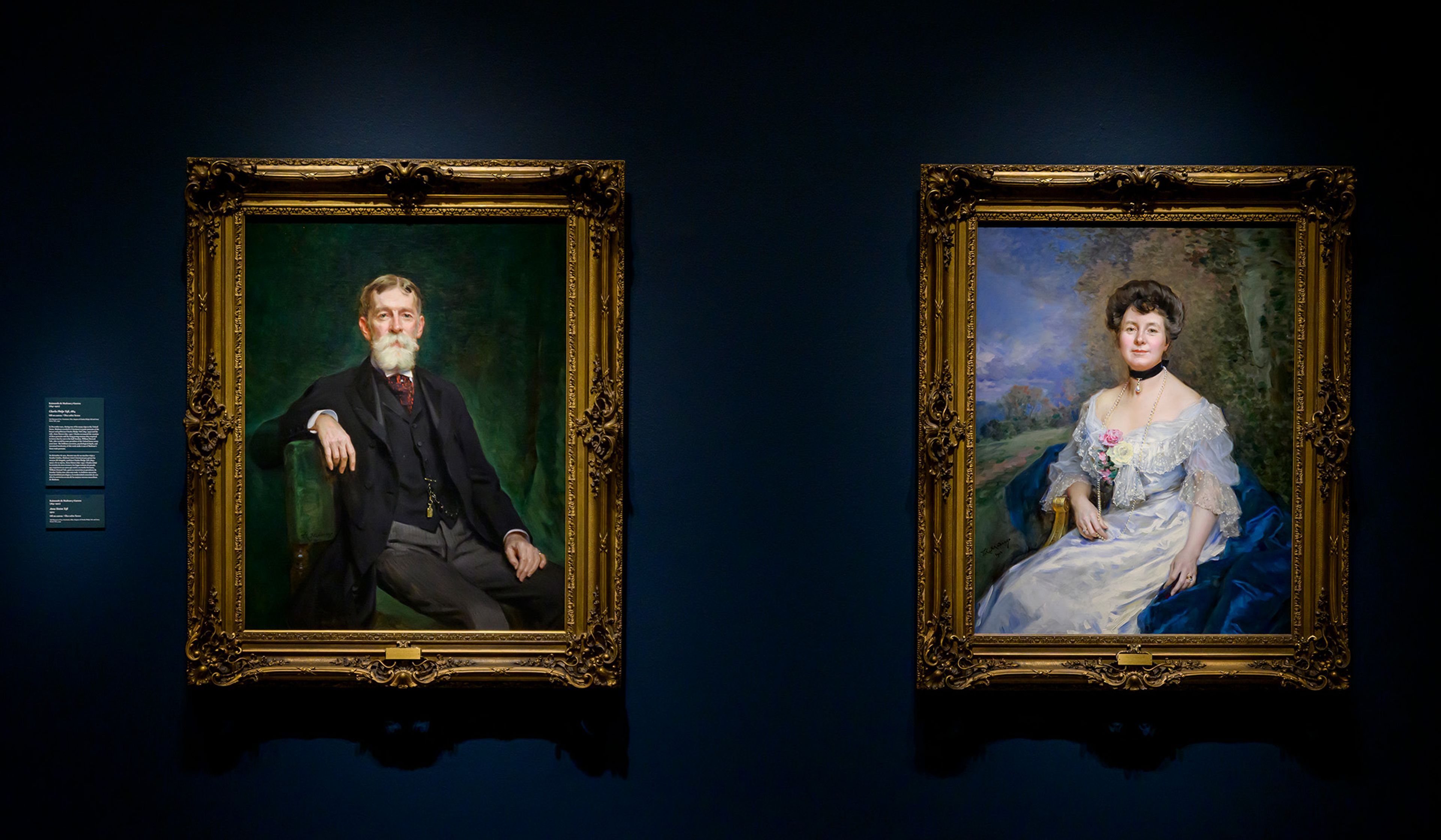
By the 1880s, Madrazo was painting portraits of rich Americans and shuttling between Paris and America. The portraits of Charles Phelps Taft, soon-to-be President Taft’s half-brother, and his wife, Anna, painted in 1902, and very beautiful, are on the conservative side since the subjects are American, and telling. Sargent was hard to get at that point, but Sargent wasn’t for everyone. His brushstroke, slashing and dazzling, was performative, certainly, and had pizzazz, but lots of patrons didn’t like that. As much as I adore Sargent and probably have written about him more than any other artist, some clients might look at his portraits as less flesh-and-blood and more objectified, dash-and-sparkle.
It’s a lovely exhibition with a comprehensive catalogue. It’s also beautifully presented as are all of the Meadows’s shows.

About the Author
Brian T. Allen is National Review’s art critic.
Featured Tags
Advertisement
Advertisement
Comments