A Historic Chance to Strengthen Religious Rights
Written by Andrea Picciotti-Bayer
What the Court does with a newly accepted case out of Colorado will shape the place of religion in American life for years to come.
Share this story
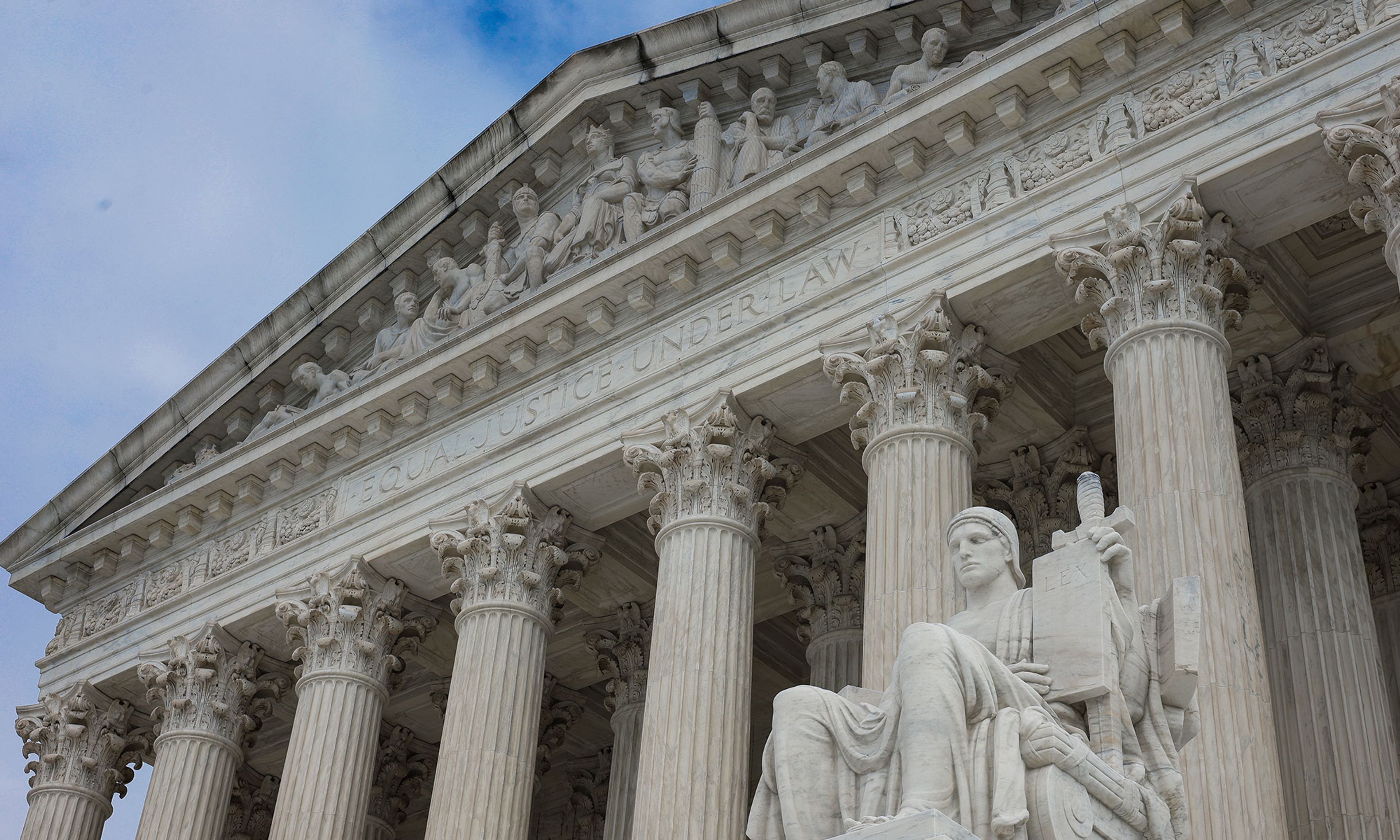
The Supreme Court announced Monday that it would take up St. Mary Catholic School v. Roy, a case out of Colorado asking whether a state may exclude a religious school from a universal preschool program because the school declines to abandon its beliefs on human sexuality and identity. While the Court declined the opportunity to revisit its 1990 decision in Employment Division v. Smith, this review promises important clarification on the nature of the free exercise guarantee. This prospect, combined with the Court’s recent establishment clause transformation, should put to rest a fashionable but mistaken narrative circulating among the progressive, secular left.
A recent study has offered fodder to those hoping to argue that this Supreme Court is hostile to civil rights. That narrative not only depends on a selective reading of the Court’s record, but it overlooks a striking reality. In its religion clause cases, the Court has not been retreating from rights. It has been strengthening them.
Many advocates believe that the central obstacle in free-exercise jurisprudence is 1990’s Employment Division v. Smith, where the court held that neutral, generally applicable laws may burden religious exercise without triggering meaningful constitutional scrutiny. The anti-religion effects of Smith are now plain. If a law is written in neutral terms, it can impose substantial burdens on religious practice with virtually no constitutional consequence.
The Court has begun to respond — cautiously. In Masterpiece Cakeshop v. Colorado Civil Rights Commission and Fulton v. City of Philadelphia, the justices ruled for religious claimants without overruling Smith. Those decisions turned on specific facts in which government hostility or the presence of discretionary exemptions undermined a law’s claim to neutrality. They offered relief, but only in narrow circumstances.
Meanwhile, conflicts between expanding nondiscrimination laws covering sexual orientation and gender identity and traditional religious conviction have multiplied. Religious orders, schools, and charities face exclusion from public programs and, in some cases, direct penalties unless they conform to prevailing norms. The basic constitutional question grows harder to avoid: Can the free-exercise clause mean much if it allows substantial burdens on religious practice so long as a law is drafted in neutral terms?
St. Mary puts that question squarely before the Court. Colorado’s universal preschool program is a benefit available to all residents and subject to a broad anti-discrimination policy regarding sexual orientation and gender identity. St. Mary’s and other Catholic preschools were refused assurances that they could participate without having to abandon their religious beliefs about human sexuality and identity. Their exclusion is not the incidental burden of a neutral law. It is the state gatekeeping public benefits based on ideological conformity.
The Court will consider whether, to escape Smith, plaintiffs must show that the government has either unfettered discretion or that there are categorical exemptions for identical secular conduct. It will also explore if Carson v. Makin (which directed courts to apply strict scrutiny when the government denies otherwise-available public benefits based on a recipient’s religious exercise) displaces Smith only when the government explicitly excludes religious people and institutions.
While the free-exercise story is one of unfinished work, the establishment clause story is one of a framework swept away and a sounder one built in its place. The shift has been rapid and consequential. For more than 50 years, Lemon v. Kurtzman required courts to examine whether a law had a secular purpose, whether its primary effect advanced or inhibited religion, and whether it created excessive entanglement. In practice, the test proved unstable and often hostile to even modest acknowledgments of religion in public life.
That era ended in 2022 with Kennedy v. Bremerton School District, which involved a high school football coach who offered a brief, personal prayer after games. The Court ruled in his favor and, more important, rejected Lemon and its progeny outright. In its place, the Court adopted an approach grounded in history and tradition.
That shift matters enormously. The question is no longer whether a reasonable observer might perceive government endorsement of religion. It is whether the government is doing something the founding generation would have recognized as an establishment of religion. Coercion, state control of doctrine, and favoritism among sects remain relevant concerns. Absent those hallmarks, the Constitution is not offended.
The practical consequences of these decisions are already playing out. Louisiana, Arkansas, and Texas have enacted laws requiring the posting of the Ten Commandments in public school classrooms. Under Stone v. Graham, a Lemon-dependent decision, such laws were considered unconstitutional. Under the Court’s more faithful understanding of the establishment clause, the analysis looks quite different.
The Fifth Circuit, sitting en banc, is currently reviewing challenges to Texas’s law. A passive display does not compel students to pray, worship, or adopt any belief. It creates no state church and directs no religious doctrine. The Ten Commandments have an undeniable place in the history of Western law and public life, a fact reflected in their presence throughout government buildings, including that of the Supreme Court itself. Whether such displays are desirable is a question for voters and legislators. The Constitution does not prohibit states from mandating them.
Will the Fifth Circuit make the most of the moment, applying a history-and-tradition framework to questions that for decades were filtered through Lemon’s faulty lens? A thorough analysis will vindicate religious liberty and lay essential groundwork for the Supreme Court’s inevitable consideration of the issue.
The Constitution does not require a secular public square. It requires a government that neither establishes religion nor penalizes its exercise. Getting that balance right by clearing away a broken establishment clause test and confronting the inadequacy of Smith is the task this Supreme Court is taking up in earnest. What the Court does with St. Mary will shape the place of religion in American life for years to come.

About the Author
Andrea Picciotti-Bayer is director of the Conscience Project and recipient of the Religious Freedom Institute’s 2025 Religious Freedom Impact Award.
Featured Tags
Advertisement
Advertisement
Comments